Restoration companies are hired at the worst possible moment for careful decisions: there is water on the floor or soot on the ceiling, the adjuster has not called back, and whoever answers the phone first tends to get the job. Most of the time it works out. When it does not, you find out months later, when the smell comes back, the drywall shows mold, or the claim is short because the documentation was thin.
The good news is that restoration is a certified trade with written standards, and checking a company against them takes about ten minutes. This guide walks through what to verify at each stage of a loss, from the first call to the final walkthrough.
Before you call: know what you are hiring
A restoration company is not a cleaning service and not a general contractor, though it overlaps with both. Its job is to stop a loss from getting worse and return the property to its pre-loss condition: water extraction and structural drying, soot and smoke removal, mold remediation, storm board-up and repair, contents cleaning. Each of those has its own standard and its own certification, and the company you want is the one that can show you which it holds.
The first call: five things to verify
- IICRC certification, by category. The Institute of Inspection, Cleaning and Restoration Certification sets the standards restoration is measured against and certifies technicians by discipline: water, fire and smoke, mold, odor. Ask which certifications the crews hold. Our technicians are IICRC-certified across fire, water, smoke, mold, storm and puff back work, and every job follows the written standard for that loss.
- Licensing and insurance. Ask for the license and a certificate of insurance showing liability and workers' compensation. A crew in your basement without workers' comp is your liability if someone is hurt.
- Real response time. Water damage compounds hourly and mold starts in 24 to 48 hours. "Someone can come out this week" is not an emergency response. Ask when a crew will actually be at the door, and whether the company is staffed overnight and on weekends. We dispatch 24 hours a day, 365 days a year, from Deer Park.
- Where the crew is coming from. A company based on Long Island knows oil-heat basements, South Shore flood zones, pre-war plaster and the local building departments. Ask where the trucks are based.
- Whether the assessment is free and written. A legitimate company inspects, measures moisture, photographs the loss and gives you a written scope before work starts. Ours is free.
If a company cannot name its certifications, show its insurance and tell you when a crew will arrive, the call is over. Everything else it promises rests on those three answers.
Before you sign: the insurance questions
A good restoration company works with your carrier, not around it. That means moisture readings, photographs and a scope an adjuster can read, and direct communication so you are not relaying messages between the two. Ask how the company documents the loss and whether it has worked with your carrier before.
Three red flags end the conversation:
- An offer to "waive" or "cover" your deductible. Your policy requires you to pay it. A contractor who absorbs it is making the money back elsewhere in the claim, and carriers treat the practice as fraud.
- Pressure to sign an assignment of benefits on the spot. Signing over your claim is legal in New York, but you should understand exactly what it means before you do, and nobody honest needs you to do it in the driveway.
- A cash discount for skipping the claim. That is a company that does not want its work documented.
Our guides to whether insurance covers mold remediation and documenting damage for a claim cover what carriers look for.
During the job: what good work looks like
- Containment. Mold and soot jobs are sealed off with plastic and negative air so contamination does not spread to the rest of the house.
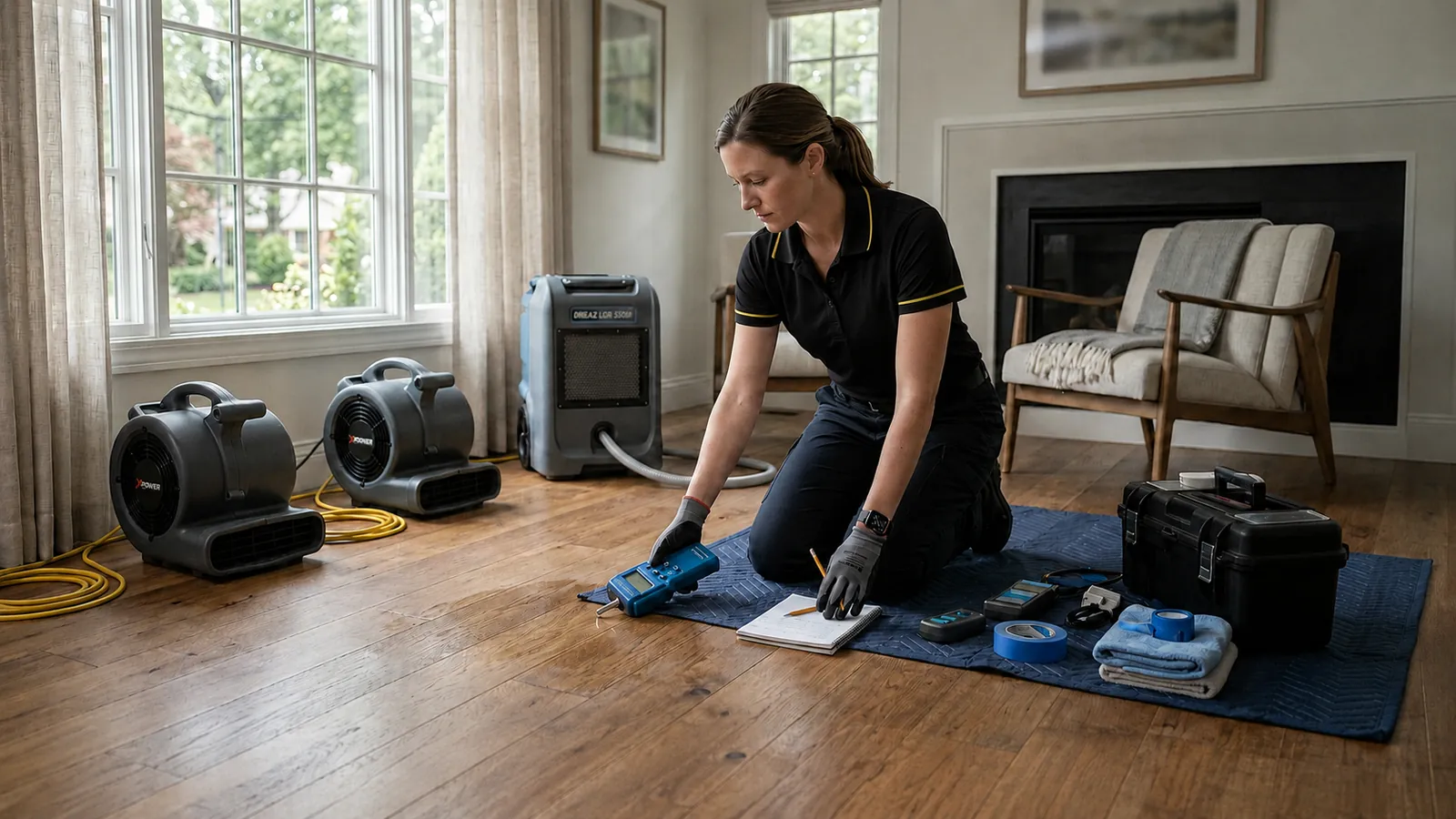
- Measurement, not guesswork. Drying is tracked with moisture meters and daily readings, and equipment stays until the numbers say the structure is dry. How long water damage restoration takes explains the phases.
- The right order of operations. Dry soot removal before any wet cleaning. Source removal before deodorizing. Fixing the moisture source before remediating mold.
- Daily communication. You should know what was done, what is next, and what the readings say.
- A clean handoff to the rebuild. The restoration scope should end with a dry, clean, documented structure and a clear record for whoever rebuilds.
At the end: the walkthrough and the file
The job is finished when you walk the property with the crew lead, the moisture readings are in the file, and the photos, readings and scope have gone to your carrier. Ask for the final documentation. It is what protects you if a question comes up later, and it is what a company that did the work properly is glad to hand over.
The questions, in one list
- Which IICRC certifications do your technicians hold?
- Can you send your license and certificate of insurance?
- When, exactly, will a crew be at my house?
- Where are your crews based?
- Is the assessment free, and will I get a written scope?
- How do you document the loss for my carrier?
- Do you handle contents as well as the structure?
- What does your final documentation include?
The Long Island specifics
Two local problems separate restoration specialists from general cleanup crews. The first is the oil-burner puff back, which coats a house in fine, oily soot through the heating system and smears permanently if wiped; ask whether the company handles it in-house, and read what is a puff back if you heat with oil. The second is water in the first half hour of a burst pipe, where the crew that arrives in two hours saves more than the one that arrives tomorrow; our first 30 minutes after a pipe bursts guide covers what you can do before anyone arrives.
We are IICRC-certified, licensed and insured, headquartered in Deer Park, and on call 24/7 across Long Island and the NYC metro. If you would rather verify than take our word for it, that is exactly the right instinct. Reach us here and ask us every question on this list.