If you've never heard the term "puff back" before walking into a soot-coated basement, you're not alone. Most homeowners go their entire lives without learning what one is — until an October morning when the heating system misfires and every surface in the house is covered in a fine, black, oily film. The cause is mundane (a malfunctioning burner), the scope is enormous (every room, every closet, the inside of the HVAC system), and the cleanup is unlike anything else in residential restoration.
This guide explains what a puff back actually is, why heating systems are uniquely prone to them, why the resulting soot can't be cleaned with household products, and what you should do in the first hour after one occurs. It's especially relevant on Long Island, where puff back season runs from the first cold night in October through the first warm week in April.
What a Puff Back Actually Is
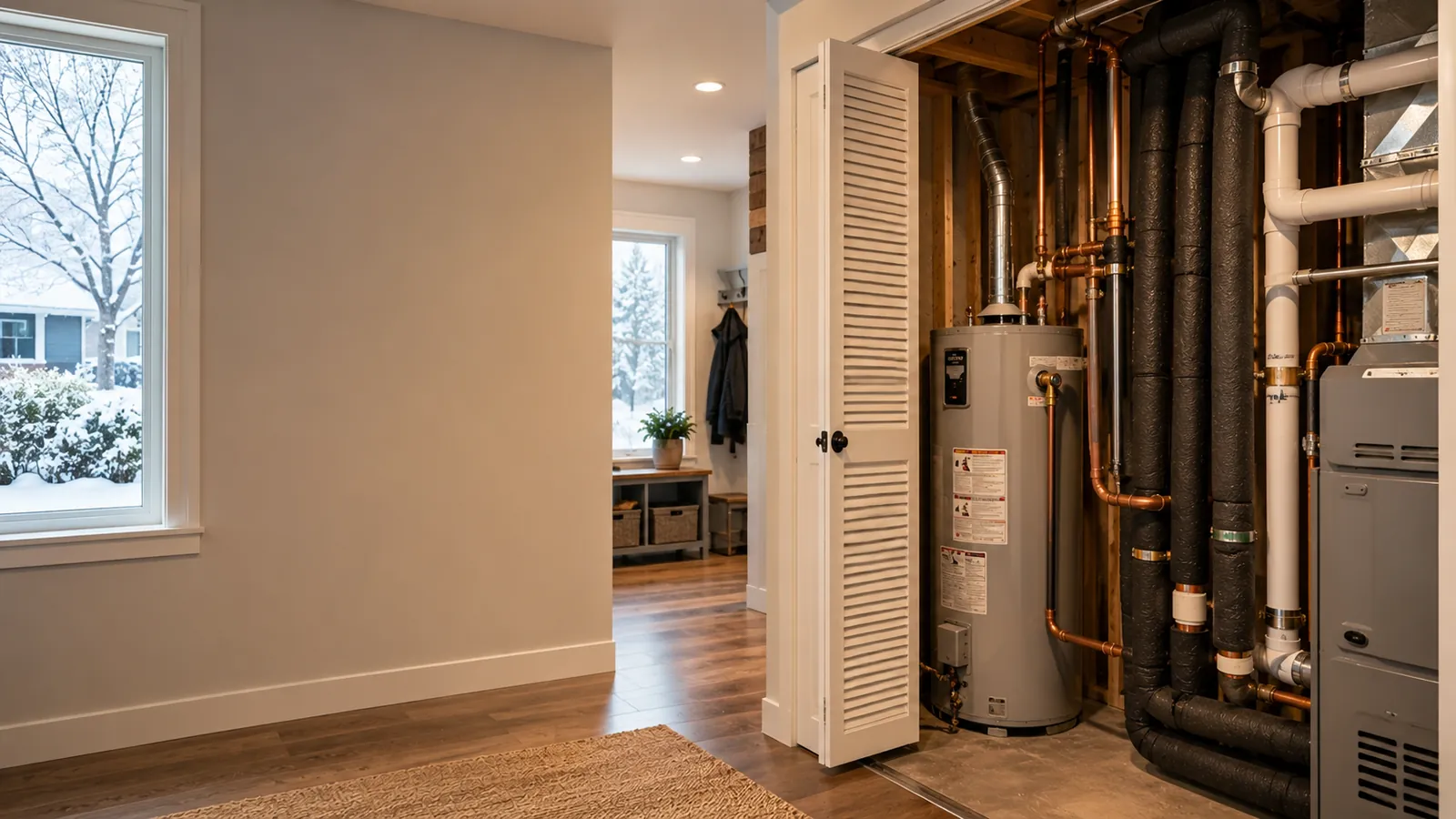
A furnace or boiler heats your home by atomizing fuel into a fine mist inside a sealed combustion chamber and then igniting that mist. When the system is working correctly, ignition happens almost instantly — the fuel atomizes, the igniter fires, the fuel burns, and the heat exchanger transfers heat to the air or water that circulates through your home.
A puff back happens when ignition is delayed. Atomized fuel keeps being delivered into the combustion chamber, but the igniter doesn't fire on schedule, or fires weakly. Unburned fuel vapor accumulates. When ignition finally happens — sometimes a fraction of a second late, sometimes several seconds late — the accumulated fuel ignites all at once. The result is a small explosion inside the firebox that forces unburned, partially-combusted, soot-laden combustion gases out through the heat exchanger, through the chimney or exhaust, and, critically, through any seams or openings in the system. From there, soot travels into the HVAC ductwork and gets distributed throughout the home.
Puff backs come in two flavors:
- Sudden, single-event puff backs. A loud "whump" from the basement, sometimes audible upstairs. Soot is visibly distributed within minutes. The homeowner usually knows something happened.
- Gradual, repeated mini puff backs. Each ignition cycle releases a small amount of soot. Over weeks or months, every surface in the home develops a thin oily film that the homeowner doesn't notice until they wipe down a baseboard and see the rag come away black. This pattern is more insidious because the source can run for an entire heating season before anyone realizes there's a problem.
Either pattern can result in significant damage. Single-event puff backs deposit a thicker layer in a smaller time window; gradual puff backs deposit a thinner layer that's been driven into porous materials by months of HVAC circulation.
Why Puff Backs Happen
Puff backs are almost always the result of a maintenance issue. The common causes:
- Clogged or dirty fuel nozzle. The nozzle atomizes the fuel into a precise spray pattern. When it's clogged or worn, the spray becomes uneven, and ignition can be delayed or incomplete. This is the single most common cause.
- Faulty ignition electrodes or transformer. Weak spark equals delayed ignition. The fuel pumps for the extra fraction of a second before the spark finally catches.
- Misaligned or eroded electrodes. The spark fires in the wrong location, missing the optimal ignition point in the spray.
- Fuel leakage during shutdown. If the burner's solenoid valve doesn't seal correctly when the burner shuts off, fuel drips into the combustion chamber while the system is idle. When the next cycle fires, that accumulated fuel ignites along with the fresh spray.
- Clogged exhaust or chimney. Soot buildup in the flue or a partially blocked chimney can cause combustion gases to back up, creating positive pressure in the firebox and forcing soot out through the seams.
- Air-in-the-line conditions. A nearly-empty tank, a fuel filter that's pulled air, or a recent delivery that disturbed sediment in the tank can all cause irregular fuel flow that produces delayed ignition.
- Skipped or deferred annual service. Burners are designed to be serviced every year. The cleaning, nozzle replacement, electrode inspection, and combustion analysis catch all of the above issues before they cause a puff back.
Notice the pattern: nearly every cause is preventable with annual maintenance. The homes that have puff backs are disproportionately homes that haven't had their burner serviced in two or three years. The cost of an annual tune-up (typically $200–$400) is a tiny fraction of the cost of a single puff back cleanup.
Why the Soot Spreads Everywhere
The reason a puff back affects the entire house, not just the basement where the equipment lives, is the HVAC system. If you have forced-air heat, the same blower that pushes warm air through the ductwork pushes the puff back soot through it — into every supply register in every room. Within minutes of the event, soot is being deposited on the walls of every bedroom, the inside of every closet, and on every surface in line of sight from a supply register.
Even homes with hot-water (hydronic) heat and no forced-air ductwork still spread soot widely. The soot escapes through any seam in the boiler, exhaust connection, or chimney cleanout door. Convection currents from the warm equipment carry it upward and outward. It penetrates door gaps, drifts up stairwells, and ends up in every room with a temperature differential.
The result is a uniform, oily, black-to-gray film coating:
- Walls and ceilings throughout the home.
- Inside cabinets, drawers, and closets.
- The tops of every horizontal surface — picture frames, mantels, bookshelves, the upper edges of doorframes.
- Bedding, towels, clothing, and any soft contents.
- The inside of the refrigerator (yes, really), through the door seal.
- The HVAC ductwork, blower, evaporator coil, and air handler.
- Electronics, including TVs, computers, and speakers — often through ventilation grilles.
The film often forms in a "spider-web" pattern, caused by static electricity drawing soot to corners and edges. Anyone who's seen the aftermath recognizes it immediately.
Why It's Not the Same as Fire Soot
Fire soot from a typical house fire varies in chemistry depending on what burned. Puff back soot has a single, consistent composition: incomplete combustion of heating fuel. That makes it:
- Highly oily. Puff back residue carries unburned hydrocarbons. The film is not dry; it has a thin oily binding.
- Extremely sticky. The oily component bonds the soot to surfaces tightly. Wipe it with a dry cloth and it smears; wipe it with water and it grinds in.
- Very fine. The particle size from delayed combustion is microscopic, which is why it penetrates everywhere — including the inside of electronics through cooling vents.
- Acidic. Like other fire residues, it can etch metals and glass over time.
- Odorous. The petroleum smell is distinctive and lingers for months in untreated materials.
Per the IICRC S700 fire and smoke damage restoration standard, fuel soot is one of the four recognized residue categories, each requiring different cleaning chemistry. Puff back residue specifically requires petroleum-based solvents — water-based cleaners not only fail to remove it, they spread it. This is the single biggest reason DIY cleanup makes the damage worse.
The classic DIY mistake: wiping puff back soot off a wall with a wet sponge. The oily soot smears, the water carries it into the paint, the residue bonds chemically into the finish, and the wall now needs to be primed with an odor-blocking primer and repainted — or replaced — rather than cleaned. We see this on roughly half the puff back calls we respond to.
Is It a Health Hazard?
Yes, though typically not at the acute level of a structure fire. Puff back soot contains polycyclic aromatic hydrocarbons (PAHs) and ultra-fine particulate matter that the EPA classifies as harmful when inhaled. The fine particle size (often well under 2.5 microns) means it penetrates deep into the lungs.
Short-term exposure typically produces coughing, throat irritation, headaches, and respiratory symptoms. Prolonged exposure — particularly common in the gradual puff back scenario where homeowners breathe low levels for months — can exacerbate asthma and other respiratory conditions. Children, elderly residents, and anyone with asthma, COPD, or cardiovascular disease are at greater risk.
Pets are also affected and often show symptoms first — coughing, sneezing, lethargy — because they spend more time at floor level where the soot density is highest.
Until a puff back cleanup is complete and air quality is verified, the affected space should be treated as a respiratory hazard. Children, infants, the elderly, and anyone with respiratory issues should stay elsewhere until the cleanup is complete.
What to Do in the First Hour
- Shut down the heating system immediately. Find the emergency switch (usually a red labeled switch at the top of the basement stairs or near the burner itself) and turn it off. If you can't locate the emergency switch, shut off the breaker for the burner at the electrical panel.
- Don't run the HVAC blower. If you have forced-air heat and the blower is still running independently, switch it off at the thermostat. Continued circulation spreads more soot into rooms that may not yet be heavily affected.
- Ventilate, but carefully. Open exterior doors and windows on opposite sides of the home to create cross-ventilation, but stay outside while it airs out. Don't run any fans — you'll aerosolize the soot.
- Get residents and pets out of the house. Especially anyone with respiratory issues, asthma, or young children. The home is not safe to occupy until it's been cleaned.
- Don't touch anything. No wiping, no cleaning, no moving items. Every surface you touch creates additional damage and complicates restoration.
- Photograph and video everything before any work begins. Wide shots of every affected room, close-ups showing the soot deposition pattern, photos of model and serial numbers on damaged electronics and appliances. This documentation goes into your insurance file.
- File the insurance claim same day. Most homeowners policies cover puff back damage as a sudden and accidental event. Call your carrier, get a claim number, and start the adjuster scheduling process.
- Call an IICRC-certified restoration company. Specifically one that has experience with puff back cleanup — not all fire and smoke restoration companies do. Cleanup typically begins within hours, not days.
- Call your heating service to repair the burner. The restoration company cleans the home; the heating company fixes the underlying cause. Both happen in parallel. The burner needs to be repaired before the heating season can continue, but cleanup cannot start until the burner is offline.
What the Cleanup Actually Involves
A proper puff back cleanup follows the S700 standard's source-removal-first principle and typically includes:
- Assessment and inventory. The crew walks the entire home, photographs and inventories affected surfaces and contents, and assesses the extent of HVAC contamination.
- Containment of the affected source. The burner area is contained so cleanup of the rest of the home doesn't risk recontamination.
- HEPA air scrubbing. Industrial HEPA-filtered air scrubbers run continuously to remove airborne soot during cleaning.
- Dry source removal. Soot is removed with HEPA vacuums and dry-chemical sponges (vulcanized rubber) before any wet cleaning. This step prevents smearing.
- Solvent cleaning. Petroleum-based and specialty cleaners specifically formulated for oily soot are used on remaining residue.
- Contents pack-out and cleaning. Heavily affected contents (clothing, soft furnishings, electronics, art) are typically removed and processed off-site at a cleaning facility. Light contents may be cleaned in place.
- HVAC cleaning. The ductwork, blower, coil, and air handler are all cleaned per NADCA standards. Failing to address the HVAC means the residue redistributes the next time the system runs.
- Deodorization. Thermal fogging, hydroxyl generation, or ozone treatment (depending on contents and substrate) addresses the molecular-level odor that surface cleaning doesn't reach.
- Post-cleanup verification. Visual inspection, surface sampling where indicated, and a homeowner walk-through to confirm completion.
Total project duration is typically 5 to 14 days depending on the scope. Larger or more contaminated homes can take three to four weeks.
Preventing the Next One
If you've just had a puff back — or want to make sure you never have one — the prevention list is short and inexpensive:
- Annual burner service. Non-negotiable. The technician cleans the heat exchanger, replaces the nozzle and fuel filter, inspects and adjusts the electrodes, and runs a combustion analysis. This single visit prevents the vast majority of puff backs.
- Don't run the tank to empty. Low fuel levels pull sediment and air. Keep the tank above 1/4 full and schedule deliveries proactively in winter.
- Address any noises or smells immediately. A burner that's clicking, rumbling, or producing visible smoke during start-up is signaling a problem. A faint fuel smell in the basement is a problem. Call your heating service the same day.
- Watch for soot streaks near supply registers. Light gray streaks above warm-air registers or around the boiler area can be the only visible sign of a gradual puff back in progress. Have the system inspected before it escalates.
- Install a CO detector near the heating equipment. Carbon monoxide is a separate hazard from puff back soot, but the same maintenance issues that cause puff backs (incomplete combustion, flue obstructions) can also produce CO. Detectors are inexpensive and required by NY State in most residential properties.
A Note on Insurance
Puff back damage is typically covered under standard homeowners policies as a sudden, accidental event. Coverage usually includes:
- Cleaning of structure and surfaces.
- Cleaning, replacement, or both for damaged contents.
- HVAC system cleaning.
- Repair or replacement of the damaged burner components (sometimes under the homeowners policy, sometimes under a separate equipment-breakdown rider).
- Additional Living Expenses (ALE) if you can't occupy the home during cleanup.
The key, as with any insurance claim, is documentation. Photos before anything is touched, prompt notification to your carrier, an IICRC-certified contractor doing the scope-of-work in a format the adjuster recognizes, and clear records of every cost incurred.
The cleanup is expensive; the prevention isn't. If you skip annual service, the math eventually catches up with you.
Why This Matters on Long Island
Puff backs are one of our most common service calls between October and April, and the pattern is consistent: older homes (often pre-1980), aging heating equipment, and a missed or delayed annual service. The first cold morning of the heating season — when a burner that's been idle since spring fires up for the first time — is statistically the most common puff back trigger. Sediment that settled during the summer, slight component wear that went unnoticed, and the higher demand of cold weather combine.
Schedule your annual service before the first cold snap, not after. And if a puff back has already happened, treat it the same way you'd treat any other fire-residue event: stop, document, evacuate sensitive residents, and call an IICRC-certified crew. We dispatch 24/7 across Long Island and NYC at (631) 388-0455.
Sources & References
- IICRC. ANSI/IICRC S700 Standard for Professional Fire and Smoke Damage Restoration. iicrc.org/s700 — the 2025 national standard governing fuel soot cleanup.
- IICRC. Standards FAQs — S590 (HVAC Assessment) and S700 Information. iicrc.org/iicrcstandardsfaqs — HVAC inspection guidance for post-event restoration.
- EPA. What Is Particulate Matter (PM)? epa.gov/pmcourse/what-particulate-matter-pm — health effects of fine particulate exposure.
- NADCA. National Air Duct Cleaners Association — Standards. nadca.com — standards for post-event HVAC cleaning.
- U.S. Department of Energy. Home Heating Systems. energy.gov/energysaver/home-heating-systems — heating system fundamentals and maintenance recommendations.