The trucks have pulled away, the street is quiet again, and you are standing in front of a house that does not look like yours. The first day after a fire is a blur of shock, phone calls and decisions, and the decisions you make in it have a real effect on three things: your safety, how much of your home and belongings can be saved, and how smoothly your insurance claim goes. Here is the first 24 hours, in the order it should happen.
Hour one: stay out, and get everyone accounted for
Do not go back inside, even for a minute, until the fire department says you can. A house that looks intact from the curb can have weakened floors and stairs, compromised framing, hot spots still smoldering inside walls, and electrical and gas systems that are no longer safe. The air is a hazard too: smoke residue and the chemicals used to put the fire out linger for days.
Confirm that every member of the household and every pet is safe. Anyone who breathed smoke should be evaluated even if they feel fine, because symptoms can be delayed. If you smell gas at any point, move everyone away from the structure and call the utility before anyone approaches the house.
The calls that set everything in motion
- Your insurance carrier. Open the claim the same day. Ask three things: how to access additional living expenses for a hotel and meals, what emergency board-up and mitigation your policy authorizes, and the claim number and adjuster's name. Write them down.
- A restoration company. A certified crew can secure the house the same day and start protecting what is salvageable before soot and moisture do permanent damage. Ours is reachable around the clock; see fire damage restoration.
- The Red Cross, if you need somewhere to go tonight. They help with emergency lodging, food and essentials after a home fire.
- Your utilities, to confirm what was shut off and what must stay off.
Secure the property before the weather does more damage
An open, fire-damaged house is exposed to rain, animals and theft, and nearly every homeowners policy requires you to take reasonable steps to prevent further damage. In practice that means emergency board-up of broken windows and doors, tarping over roof and wall openings, and fencing off unsafe areas. This is one of the first things a restoration crew does, the cost is normally part of the covered claim, and doing it quickly keeps rain and humidity from turning a fire loss into a mold problem within days.
Document before anything is touched
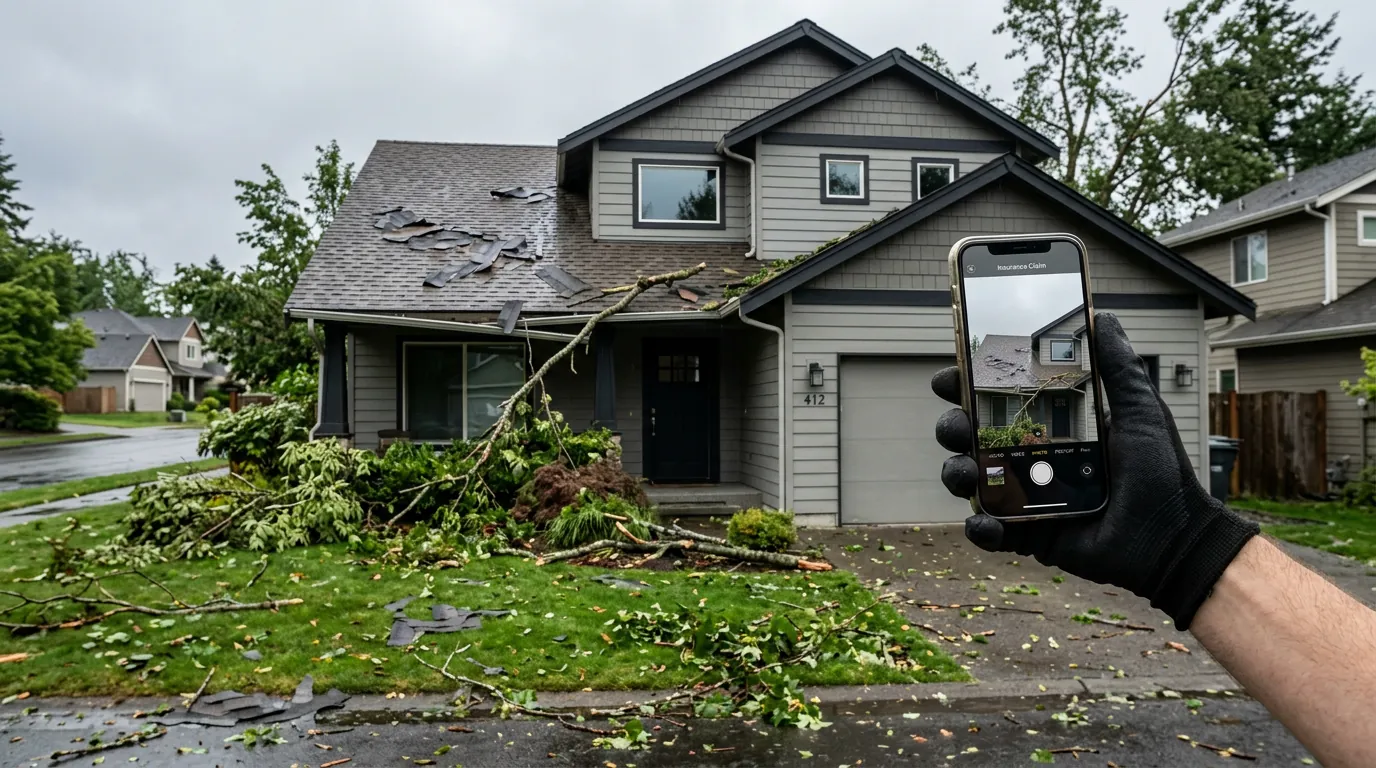
This is the step people skip, and it is the one that protects the claim. Once the property is safe to photograph, from outside or under professional supervision, build the record before any cleanup starts:
- Wide shots of every room, then close-ups of damaged items and surfaces.
- The exterior, the roof and any structural damage.
- A written inventory of damaged and destroyed belongings, with approximate values and purchase dates where you know them.
- Receipts for everything you spend because of the fire, starting today: the hotel, clothing, toiletries, food, supplies.
Do not throw anything away yet, even what is obviously a total loss. The adjuster needs to see it. The same discipline that governs storm claims applies here, and our guide to documenting damage for an insurance claim covers the photo sequence adjusters look for.
The two things that most often shrink a fire settlement are damaged items thrown out before the adjuster saw them, and cleanup attempted before the loss was photographed. Both happen on day one, and both are avoidable.
What not to touch
The urge to start cleaning is strong. Resist it. A few well-meaning mistakes in the first day cause permanent, and sometimes uninsurable, damage:
- Do not wipe soot off anything. Soot is acidic and abrasive; wiping grinds it in and sets the stain. Professionals use dry removal first for a reason, explained in why you should never clean fire soot yourself.
- Do not turn on the heat or air conditioning. The system will pull soot through the ductwork into every room, including ones the fire never reached, and contaminate itself in the process.
- Do not use appliances or electronics that were exposed to heat, smoke or the water used to fight the fire until they have been checked.
- Do not eat food that was exposed, including canned and packaged goods near the fire. Heat spoils contents even when the packaging looks fine.
- Do not launder smoke-damaged clothing at home. A household washer sets the odor permanently. Set those items aside for professional cleaning.
What to grab, if you are allowed a supervised entry
If the fire department clears a brief, supervised trip inside, prioritize what is hard to replace: identification, passports, birth certificates, insurance papers, medications, prescription glasses, checkbooks and cards, and a few days of clothing for each person if it is not smoke-damaged. Leave the rest. Everything else can be documented and dealt with over the following days.
Understand the two kinds of damage
A fire leaves behind more than what the flames touched, and the second kind is the one homeowners underestimate. The first is fire and structural damage: charring, burned framing, collapsed ceilings. The second is smoke, soot and water: residue that travels through the whole house on air currents and through the HVAC system, odor that bonds to porous materials, and water from the hoses that soaks floors, walls and insulation. The second kind is usually the larger part of the restoration, and it is the part that gets worse by the hour. Our smoke damage cleanup page explains the process, and why the smoke smell keeps coming back explains what happens when it is done halfway.
The next few days
Once the house is secured and documented, the work becomes a sequence: the adjuster's inspection, a written scope of the restoration, contents pack-out and cleaning where needed, structural drying, soot removal, odor treatment, and then rebuild. Keep every receipt, keep a log of every call and every name, and keep a copy of everything you give the carrier.
We are headquartered in Deer Park and respond across Long Island and the NYC metro 24 hours a day. If the fire was last night, the right time to call is now, before the soot sets and the weather gets in.